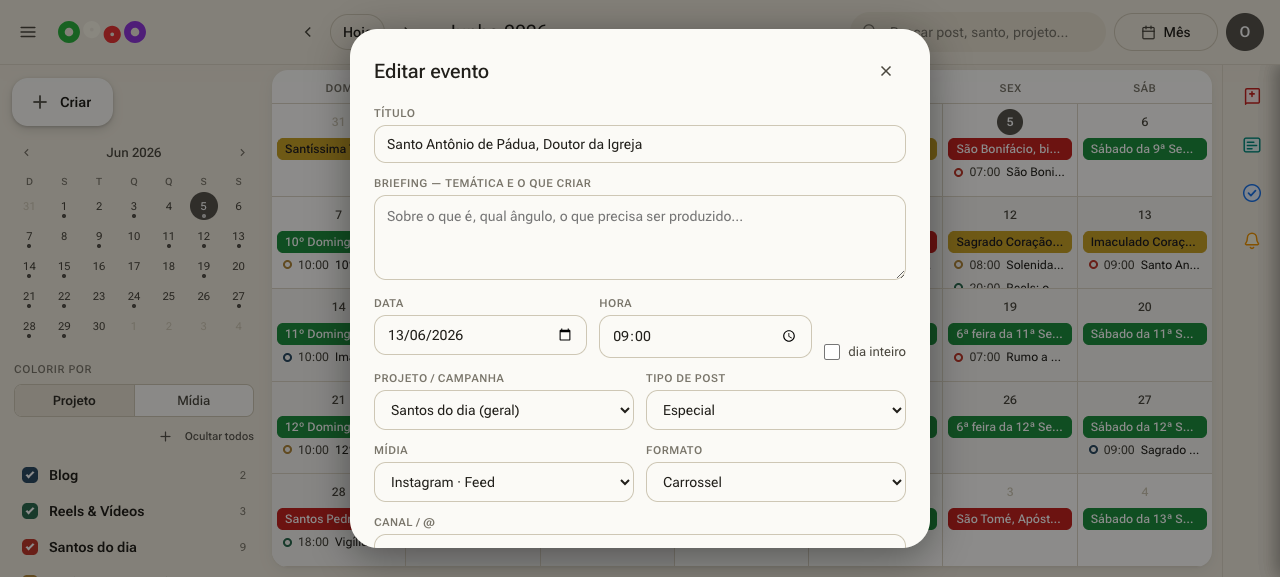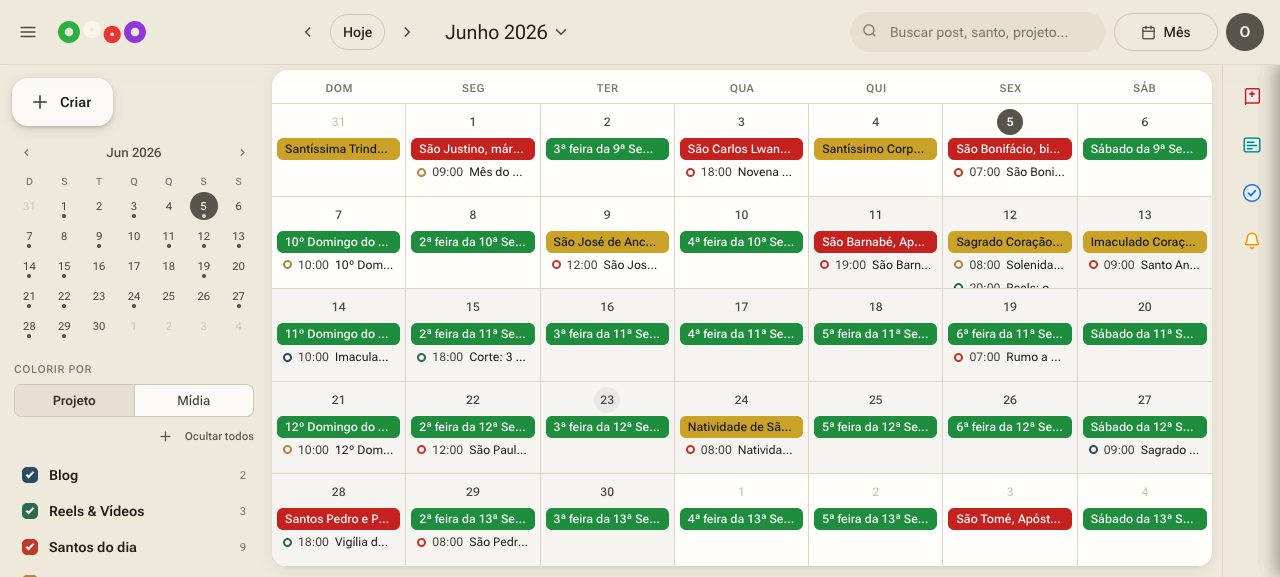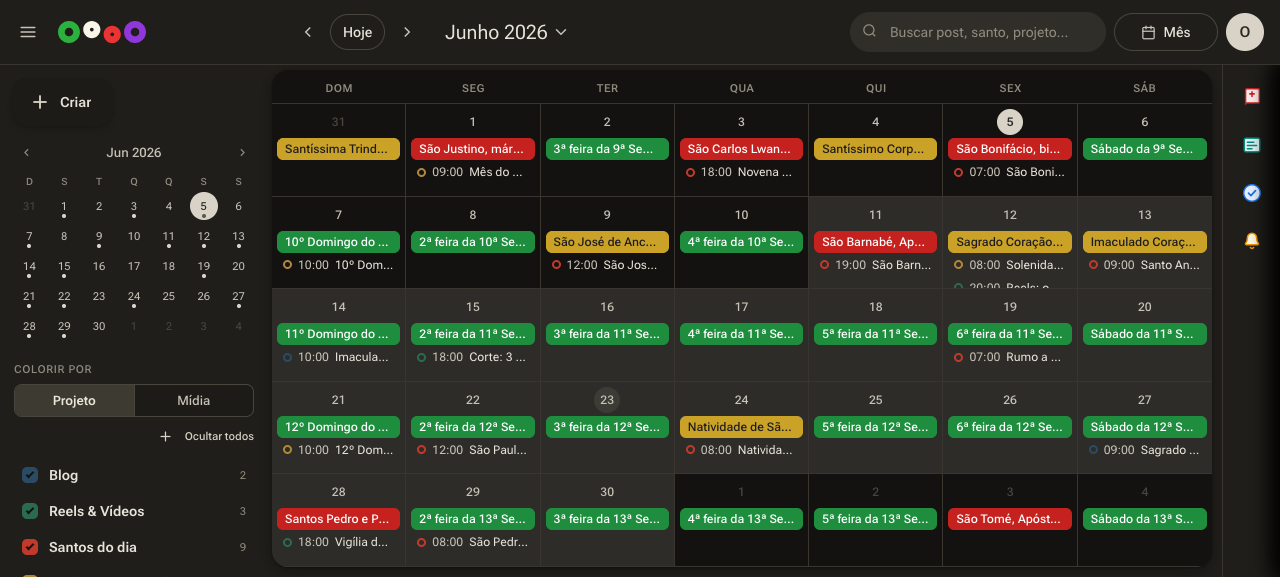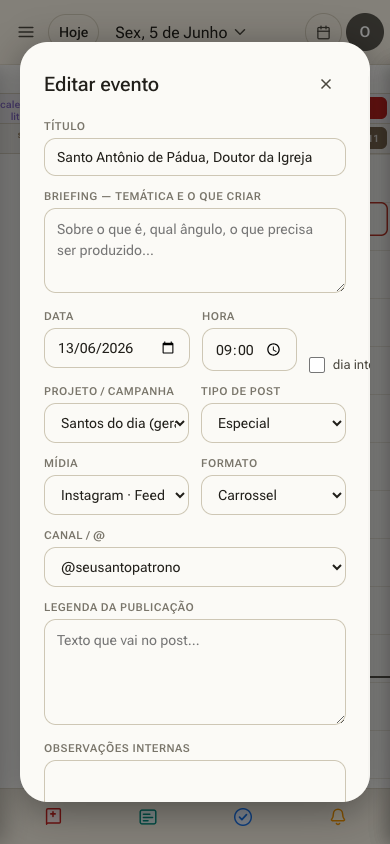
Priest, secretary and volunteers on the same calendar — planning around Sunday and the saints, and not in the improvisation of the WhatsApp group.
Free forever on the base plan · Sign in with Google
The WhatsApp group turns into a pile of last-minute requests. The artwork comes out late, the Sunday Mass nearly goes unannounced, the novena to Our Lady arrives the night before. Without a single place, parish communications depend on whoever remembered — and lose their consistency.
A request here, artwork there, a loose note in a private chat. Without a calendar, everything lives in the memory of whoever is online at the moment.
One busy week, three quiet ones. When the parish office is overloaded, communications simply stop.
The patron saint, the solemnity, the start of the novena — when no one plans with the Church's calendar in view, the date slips by unnoticed.
The parish doesn't communicate in a vacuum: it communicates within the Church's year. Ordo puts the entire liturgical calendar — seasons, solemnities, saints and the Gospel of each Sunday — underneath the team's planning. The date stops being remembered from memory and becomes the anchor that multiplies the week's output.
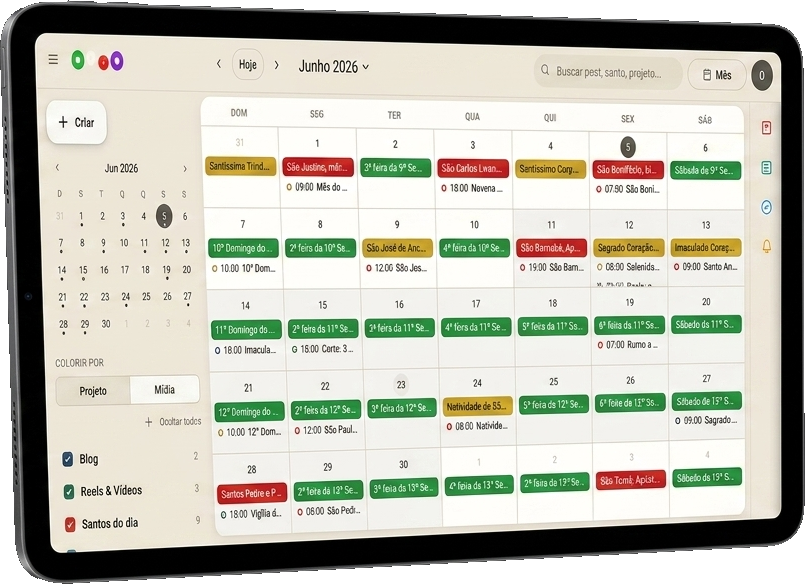
The liturgical color, readings and celebration of each day already appear on the calendar, following the CNBB. The team plans the week without ever missing a feast.
A Sunday, a solemnity, the start of a novena — from each anchor come the announcement, the card, the invitation and the caption. One date becomes a week of content.
Announcements, artwork, production stages and the saint of the day on the same board. The parish office stops searching through WhatsApp history.
Parish communications have pieces that repeat. Ordo brings ready-made Templates for them, tied to the liturgical calendar — just pull the date and adjust.
The Martyrology of the day becomes the announcement and the devotion card — with Saint or Blessed before the name, as the Church requires.
The reading of each Sunday becomes the invitation to Mass and the post with the Gospel passage, on the right day.
Mass times, confession, the novena to Our Lady and the patron saint's feast — repeatable templates the parish office just fills in.


Connect Ordo to the chat the parish already uses and say: "build the novena to Our Lady of Aparecida" or "plan the week of Corpus Christi". The announcements, invitations and captions are born right inside Ordo, on the right day, in the parish's voice.
Yes. It was designed for parish communications ministry — priest, secretary and volunteers planning the announcements, the artwork and the invitations together, around Sunday and the saints. If your parish communications today live in the WhatsApp group, Ordo is for you.
On the Free plan, you organize everything in one account. On Pro, invite the whole team with roles — owner, editor and viewer — so that priest, secretary and volunteers work on the same calendar, in real time.
You connect Ordo to the chat you already use — Claude, ChatGPT or Gemini — by generating a personal link in the settings. Then just ask, in plain language, for it to plan the month or build a novena: the content ideas are born inside Ordo, in the parish's voice. The intelligence is yours (the subscription you already pay for); Ordo provides the liturgical context and writes it in the right place.
No. The Free plan is complete and forever: calendar, saint and liturgy of the day, unlimited announcements and even the simple AI in the app. Pro adds the Studio (plan through the chat), teams with roles and Catholic Calendars.
Yes, with no commitment. When you cancel, the parish stays on the Free plan with everything it has already created.