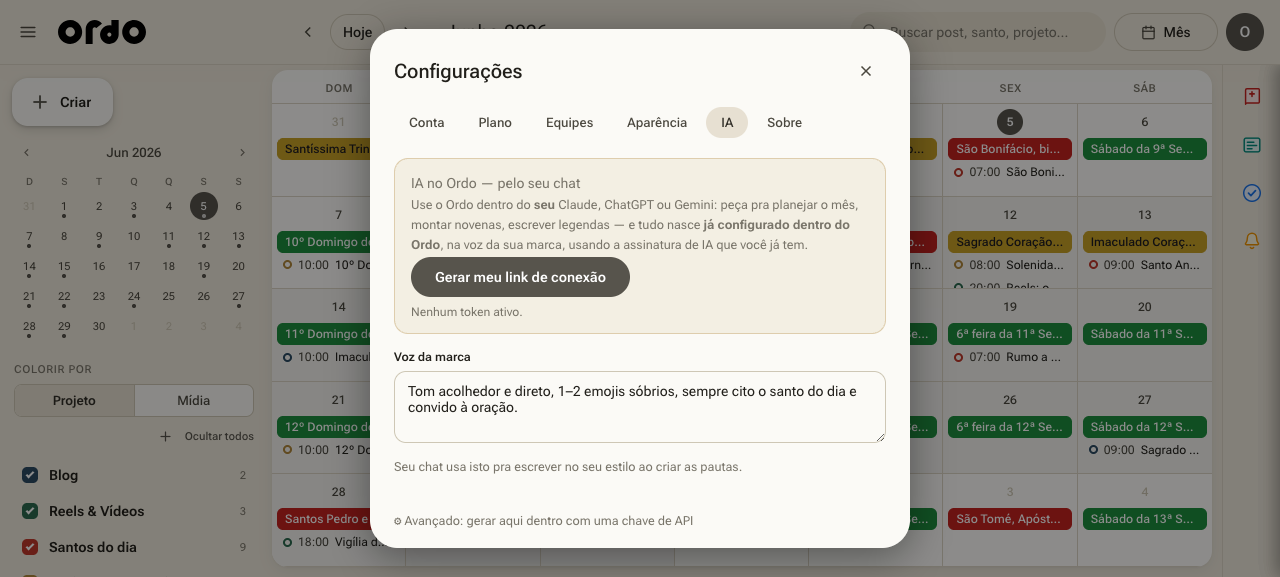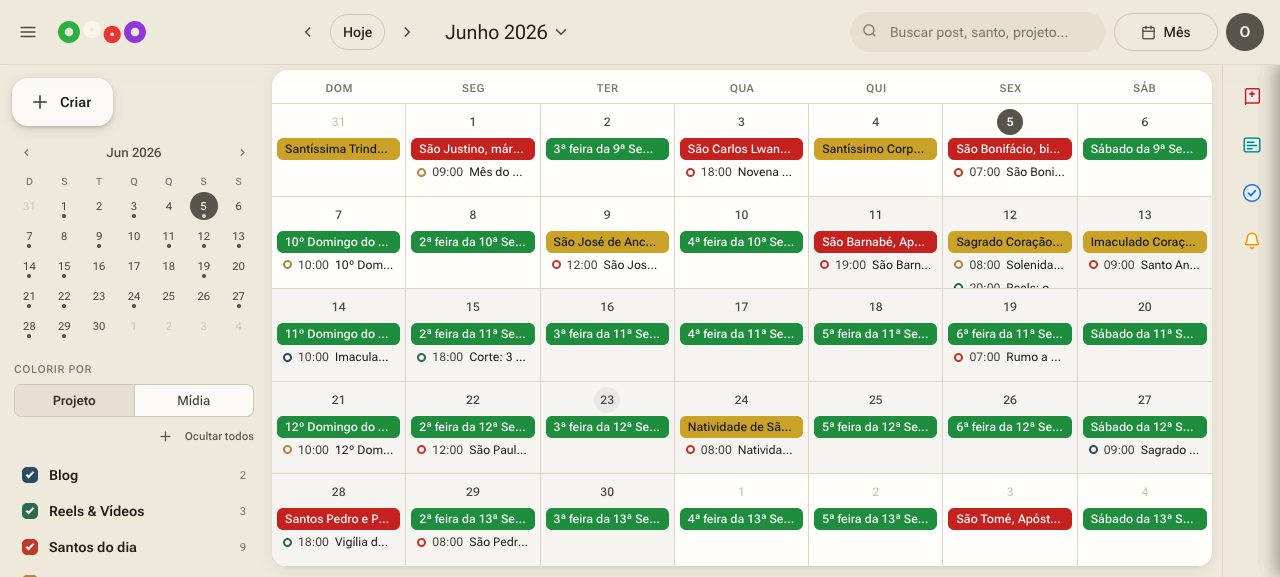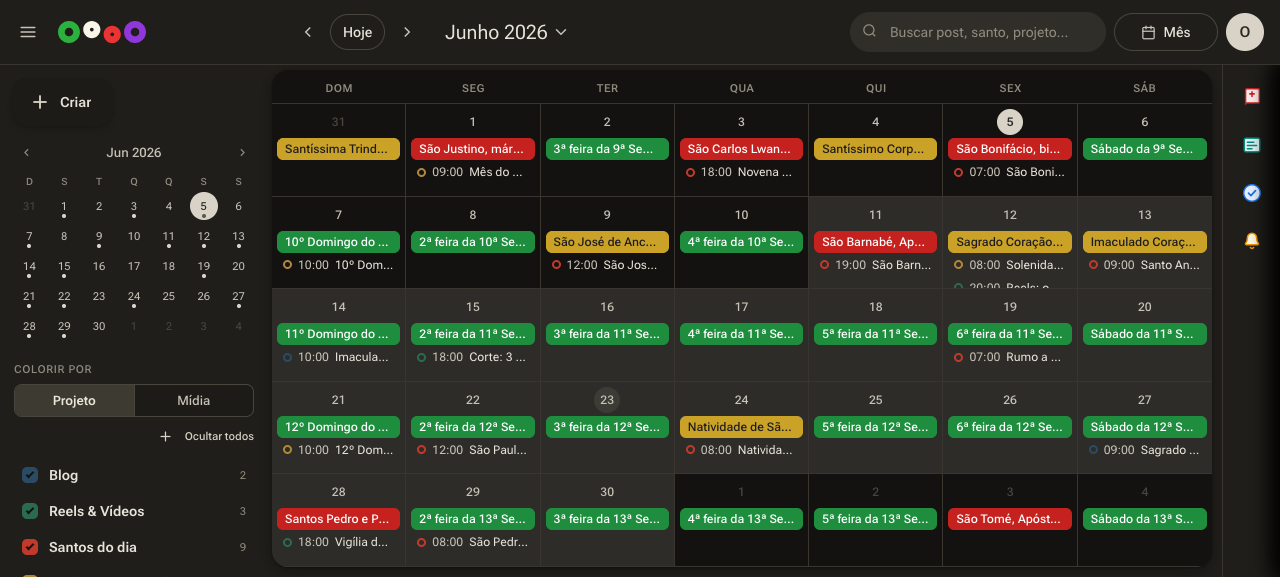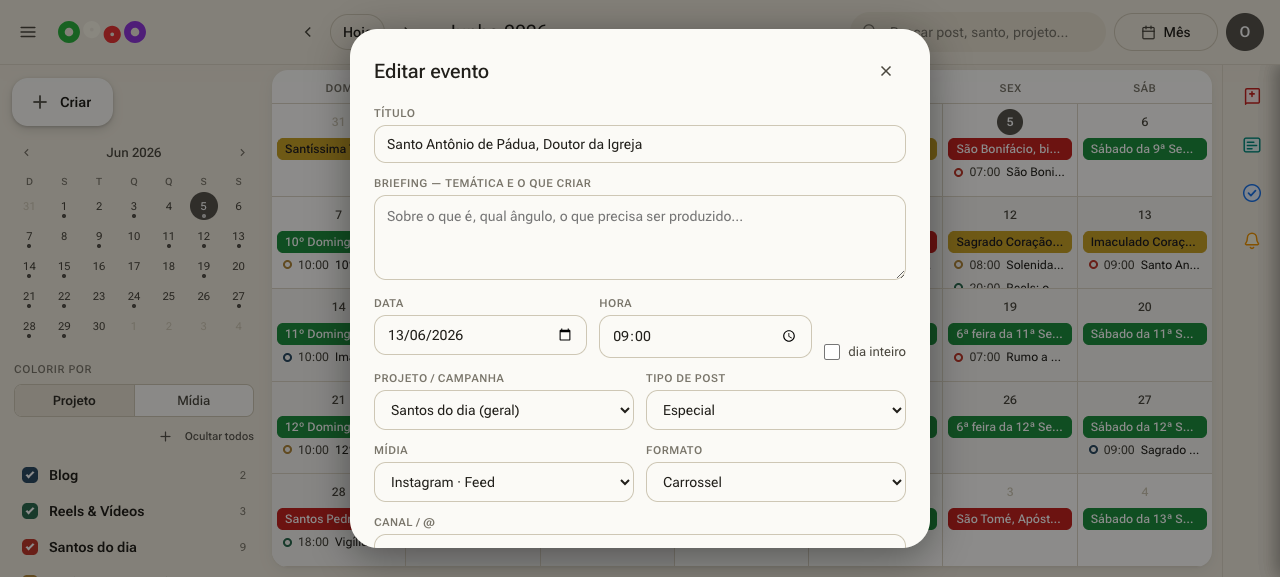
Each parish plans on its own calendar; the diocesan communications ministry sees everything, standardizes the templates and runs the diocese's campaigns — all in one place.
Free forever on the base plan · Sign in with Google
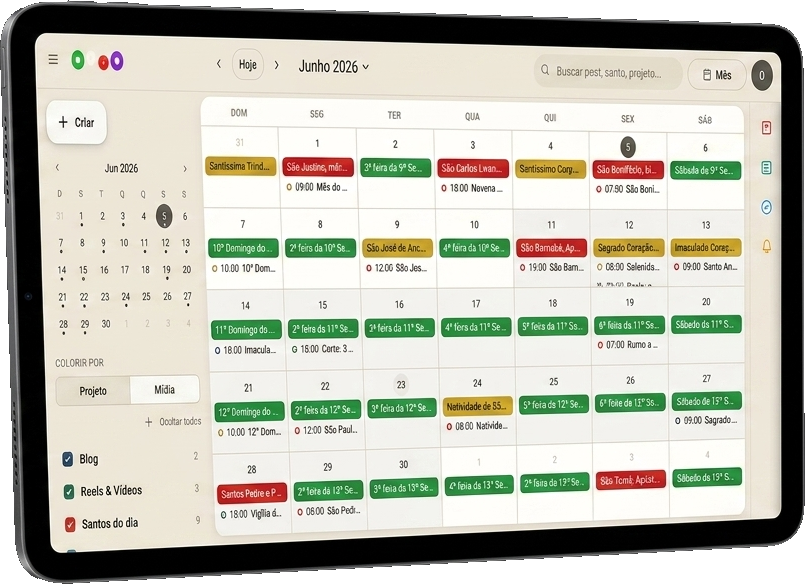
There are dozens of communities, each communicating in its own way, with no standard. It is hard to keep track of who is up to date, to support those who need it — and still get a diocesan campaign to reach every parish in the same tone. Ordo brings the whole diocese under a single view.
Each community has its own calendar and its own roles (owner, editor, viewer). The parish organizes its own communications without interfering with the others.
The communications ministry sees, on a single board, what each parish is planning — who is up to date, who needs support.
The same liturgical year for every parish — solemnities, memorials and the Martyrology of the day already inside each community's calendar.
The diocesan communications ministry creates the Templates — the content structure, the tone, the right fields — and distributes them to every parish. Communications gain unity without each community starting from scratch. And a diocesan campaign is planned all at once, through the chat, to reach everyone.
The diocese standardizes the types of content — novena, patron saint's feast, parish announcement — with the structure and tone of the particular Church.
The Templates reach every community. Each parish fills in its own without reinventing the format — the unity comes built in.
Ask through the chat: "plan the Lent campaign for the whole diocese." The content ideas are born on the calendar, on the right day, in each parish.


Teams per parish, the Templates distributed by the diocese and the layers of Church history ready to become a campaign.
Invite the communications workers of each community with roles (owner, editor, viewer). The diocese follows along; the parish works.
The ministry creates the content templates and distributes them to every parish — unity of tone and format across the whole particular Church.
Councils, Popes, Eucharistic Miracles and more — the milestones of the faith appear on the dates as layers, ready to become a campaign across the whole diocese.
Each parish has its own calendar and its own roles (owner, editor, viewer). The diocesan communications ministry sees, on a single board, what each community is planning — without interfering with anyone's work. The diocese follows along; the parish works.
The ministry creates the content Templates — the structure, the fields and the tone of each type of communication (novena, patron saint's feast, announcement) — and distributes them to every parish. Each community fills in its Template without reinventing the format, and the diocese's communications gain unity without starting from scratch.
Yes. Through the chat you already use — Claude, ChatGPT or Gemini — you ask, in plain language, for Ordo to plan the campaign (Lent, the Marian Month, the feast of the diocese's patroness): the content ideas are born on each parish's calendar, on the right day, in the same tone. It's the campaign reaching every community at once.
Yes. The liturgical year (CNBB) and the Martyrology of the day already come inside each community's calendar — solemnities, memorials, liturgical color and readings. The whole diocese plans on the same liturgical foundation.
No. The Free plan is complete and forever: calendar, saint and liturgy of the day, unlimited posts and even the simple AI in the app. Pro adds the Studio (plan campaigns through the chat), teams per parish, standardized templates and Catholic Calendars.
Yes, with no commitment. When you cancel, the diocese stays on the Free plan with everything that has been created.